
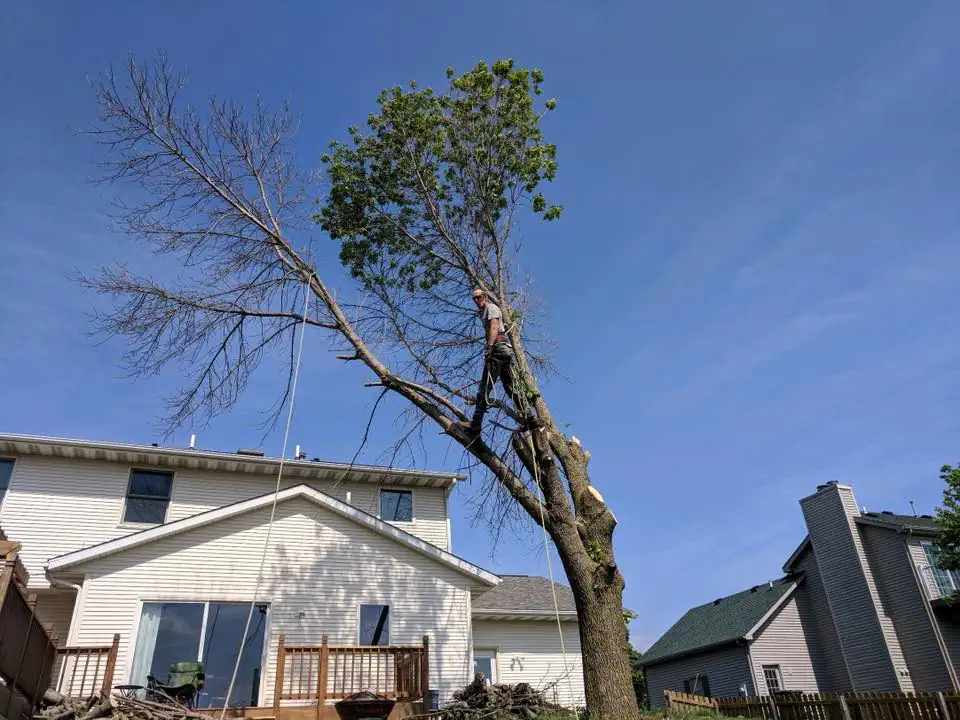
Seeing a dead tree limb can trigger worry that the whole tree is dying, especially when limbs hang over a house, driveway, or play area. Dead tree limbs are easy to spot, and they naturally prompt questions about safety, the underlying cause, and whether the tree can be saved.
Agitate: That worry grows when other subtle symptoms appear, such as thinning foliage, fungal growths, or cracking at the trunk. Homeowners and property managers often struggle to tell if a single dead limb is an isolated issue or the first visible sign of a much larger decline in tree health.
Solve: This article explains how to interpret dead limbs, which dying tree signs matter most, and when to pursue a professional tree inspection. The goal is to help you recognize what is normal, what calls for monitoring, and when an arborist or tree removal is the safest option.
One dead limb does not always mean the entire tree is dying
A single dead limb is often an isolated issue rather than proof the whole tree is failing. Limbs can die from localized causes such as physical damage, lightning strikes, insect attacks, or sunscald, and the rest of the crown may remain healthy for years.
However, context is critical when assessing risk. A dead limb is a visible symptom that deserves attention, and repeated or spreading limb death can point to systemic problems like root decline, severe disease, or chronic water stress.
Dead tree limbs can be a warning sign, but not every dead limb signals a dying tree
Treat dead tree limbs as a useful clue rather than a diagnosis. Look for supporting dying tree signs like widespread canopy dieback, epicormic shoots, reduced leaf size, and fungal conks on the trunk to determine whether the issue is local or systemic.
When dead limbs appear alongside multiple concerning symptoms, the probability that the whole tree is in decline rises. For example, if several branches throughout the crown are losing leaves at once or the tree produces fewer leaves each season, these patterns are more alarming than a solitary dead limb.
Common dying tree signs to monitor
Pay attention to crown health and leaf patterns, because early detection improves outcomes. Thinning at the top of the tree, leaves that are pale or undersized, and dieback that progresses from branch tips toward the trunk are all classic signs that the tree could be in trouble.
Fungal fruiting bodies and cavities are also serious signals. If you see mushrooms at the base or bracket fungi on major limbs, decay may be undermining structural integrity. These signs, together with dead limbs, justify a closer look from a trained arborist.
A single dead limb may mean a larger problem when it appears with other symptoms
A solitary dead limb becomes more significant when combined with other indicators of poor tree health. Severe root damage, root rot, or vascular disease often show up first in the canopy as one or more dead limbs, and then the decline accelerates.
Root issues can be subtle because they are below ground, but their effects show above ground. Construction, soil compaction, chronic waterlogging, or severe drought can damage roots and reduce the tree’s ability to transport water and nutrients, creating stress that manifests as limb dieback.
In heat stress situations, trees lose water faster than they can absorb it, making proper deep watering and mulching vital for survival. This detail matters because a careful review of the full situation can prevent avoidable mistakes and support a more reliable result.
Inspecting the tree is the correct first step when you see dead tree limbs
A careful tree inspection helps distinguish isolated limb death from a systemic problem and informs appropriate action. Begin with a visual walk-around, looking for patterns: Are dead limbs isolated to one side, clustered in one part of the canopy, or scattered throughout?
Check the trunk and root collar for cracks, visible decay, or fungal growth. Look for signs of pest activity such as bore holes, sawdust-like frass, or unusual sap flow. If the cause is not obvious, an ISA-certified arborist can perform a more detailed assessment using tools and methods that reveal internal decay and root issues. For property owners seeking professional evaluation, Beez Trees offers ISA-certified arborist consultations and tree health evaluations to identify underlying causes and treatment options.
Pruning and targeted interventions can save many trees with a few dead limbs
When dead limbs are isolated and the rest of the tree is healthy, selective pruning is usually an effective remedy. Removing the dead material reduces risk, improves appearance, and allows the tree to allocate resources to healthy parts of the crown.
Proper pruning technique matters because improper cuts can create additional wounds and invite decay. If pruning is extensive or the limb is large and near structures, professional crews and the right equipment are essential. Beez Trees has experience with careful crown pruning and can advise whether pruning alone will restore tree health or if further steps are needed. For ongoing canopy care, consider scheduling professional tree trimming and pruning services to maintain structural integrity and promote tree health.
When immediate removal is necessary: safety and irreversible decline
The tree or limb should be removed when it poses an imminent safety risk or when diagnostic signs indicate irreversible decline. Emergency situations include large dead limbs that are cracked or hanging, major trunk splits, or root failure that causes noticeable lean, especially over buildings, roads, or utilities.
In urgent scenarios, time is critical to prevent property damage or personal injury, and emergency crews can stabilize or remove hazards quickly. Beez Trees provides 24/7 emergency tree removal and storm cleanup for situations where rapid action is required to protect people and property.
Long-term care and monitoring to protect tree health
After removing dead limbs or treating a condition, regular monitoring and proper long-term care improve the chances of recovery and reduce future limb death. Good practices include appropriate watering schedules, correct mulching, soil aeration when compacted, and avoiding injuries to roots and trunk from construction or mowing.
If pests or diseases caused the limb death, following an arborist’s recommendations for treatment and prevention helps protect nearby trees too. Periodic tree inspection or scheduled maintenance by a qualified arborist supports tree longevity and helps catch new issues early.
How an arborist helps interpret signs and recommend next steps
An arborist evaluates symptoms, hazards, and long-term prognosis to recommend selective pruning, treatment, monitoring, or safe removal. Diagnosis often requires combining visual clues with knowledge of local pests, diseases, and environmental stressors to create a management plan.
An ISA-certified arborist will document findings and present options based on tree health, structure, and the surrounding site conditions. For homeowners who need professional insight, an arborist consultation can prevent unnecessary removals and ensure that any interventions protect both safety and tree health.
Related resources for next steps
For more detail, review Beez Trees’s professional tree trimming and pruning services page and its 24/7 emergency tree removal and storm cleanup resource before making a final plan. These pages provide additional context about the services and decisions discussed above, while keeping the focus on what applies to your property and priorities.
You can also explore ISA-certified arborist consultations and tree health evaluations when that aspect of the project affects your situation. For independent background, In heat stress situations, trees lose water faster than they can absorb it, making proper deep watering and mulching vital for survival. offers high-authority educational guidance that supports a careful, informed decision.
Frequently Asked Questions
1. Can one dead limb fall without warning and injure someone?
A single dead limb can break unexpectedly under wind or heavy snow and fall with little warning, which is why visual inspection matters. Beez Trees in Champaign, IL recommends watching for cracks, loose bark, and hanging branches and recommends professional help if any of those signs appear. When a limb threatens a structure or path, a prompt evaluation reduces risk. If you notice dangerous conditions, document the symptoms and seek an assessment from a qualified crew.
2. How can I tell if the tree needs pruning or full tree removal?
Determining whether pruning or tree removal is appropriate depends on the extent of decline, the tree’s structural condition, and potential hazards. Beez Trees in Champaign, IL evaluates crown health, trunk stability, and root conditions to recommend the safest option. Isolated dead limbs often require pruning, while widespread decay or structural failure may necessitate removal. An on-site inspection clarifies which action will protect property and preserve tree health when possible.
3. Are dead limbs more common after storms or droughts?
Dead limbs are common after both storms and droughts, but the mechanisms differ: storms cause mechanical damage while drought stresses the vascular system. Beez Trees in Champaign, IL looks for storm-related cracks and uprooting as well as drought-induced dieback and leaf scorch. Consistent care and timely interventions can reduce limb loss in both scenarios. If weather events have recently affected your property, a professional inspection can identify hidden damage.
4. What can I do at home to support tree health and reduce limb death?
Simple care steps include deep watering during dry periods, maintaining a mulch ring, avoiding root damage from construction, and monitoring for pests and disease. Beez Trees in Champaign, IL suggests following an arborist’s guidance for watering schedules, mulching depth, and trunk protection. Small, consistent actions often prevent stress that leads to dead limbs. When in doubt, ask for a professional tree inspection to tailor care to your tree species and site conditions.
Conclusion
Understanding dead tree limbs starts with clear information, realistic priorities, and attention to the details that affect your property. Homeowners in Champaign, IL can use the points in this guide to compare options, ask better questions, and make a confident next decision.
Beez Trees Is Ready to Help in Champaign, IL
Beez Trees brings certified arborist expertise and local experience to property owners in Champaign, IL who need answers about dead limbs, tree health, or safety concerns. If you are unsure whether a limb signals a larger problem or requires removal, use the company website or contact form to request a consultation. The team can inspect the situation, explain options, and help you choose the safest, most sustainable path forward.

